
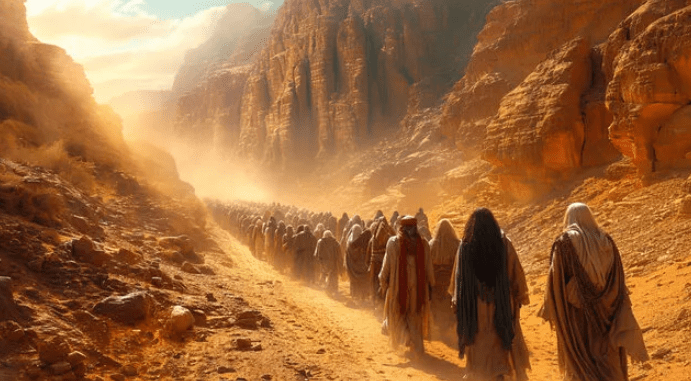
Its Ash Wednesday, we begin to break our 24 hour fasts as we conclude the first day of our Catholic Canoeist journey. Exodus is going to be the main focus of our biblical readings for the Lenten Observance. The first two books we have discussed are a little lesser known than Exodus – read Lenten Book Introduction – Book of Tobit (click here) and Lenten Book Introduction – Book of Sirach (click here).
Moses is traditionally regarded as the author of Exodus. Interestingly, the book itself mentions his literacy, a detail that many cite as evidence of his authorship. The time period of the events of Exodus take place somewhere between 1500 – 1200 BC, these dates are of course debated.
As for the book’s contents, it serves as the perfect companion for a Lenten journey. I began exploring the connections between Exodus, Moses, and the life, death, and resurrection of Jesus. It became clear that Jesus closely mirrored the Exodus story. Instead of listing the correlations here, I will refer you to this website – https://www.austingentry.com/similarities-between-moses-jesus/.
I encourage you to reflect as you read Exodus and see yourself in the people of Israel.
May the Red Sea part for you,
Summer Sausage – Catholic Canoeist
Extra:
During my research I stumbled upon the debate of the authenticity of Exodus. Many have proposed the book to be fiction. There are no accounts in Pharaoh records of the people of Israel bringing plagues upon Egypt and escaping the Pharoah. The proposed theory suggests the book was written by a group of Jews centuries later as an exciting tale of origin. The rebuttal to this is the following, the Pharaohs never wrote things that would make them seem human or embarrass them in any type of way. So, the Jewish nation humiliating all of Egypt with the plagues and then defeating them in an escape—where the Egyptian chariots ultimately drowned in the Red Sea—was likely never recorded. Additionally, Exodus contains numerous references to Egyptian culture that a group of Jews centuries later would likely not have known. Examples include labor quotas, the use of acacia wood—found primarily in Egypt—for constructing the Tabernacle, and building techniques exclusive to the Egyptians of that era.

 Chupacabra Canoe
Leave a comment